


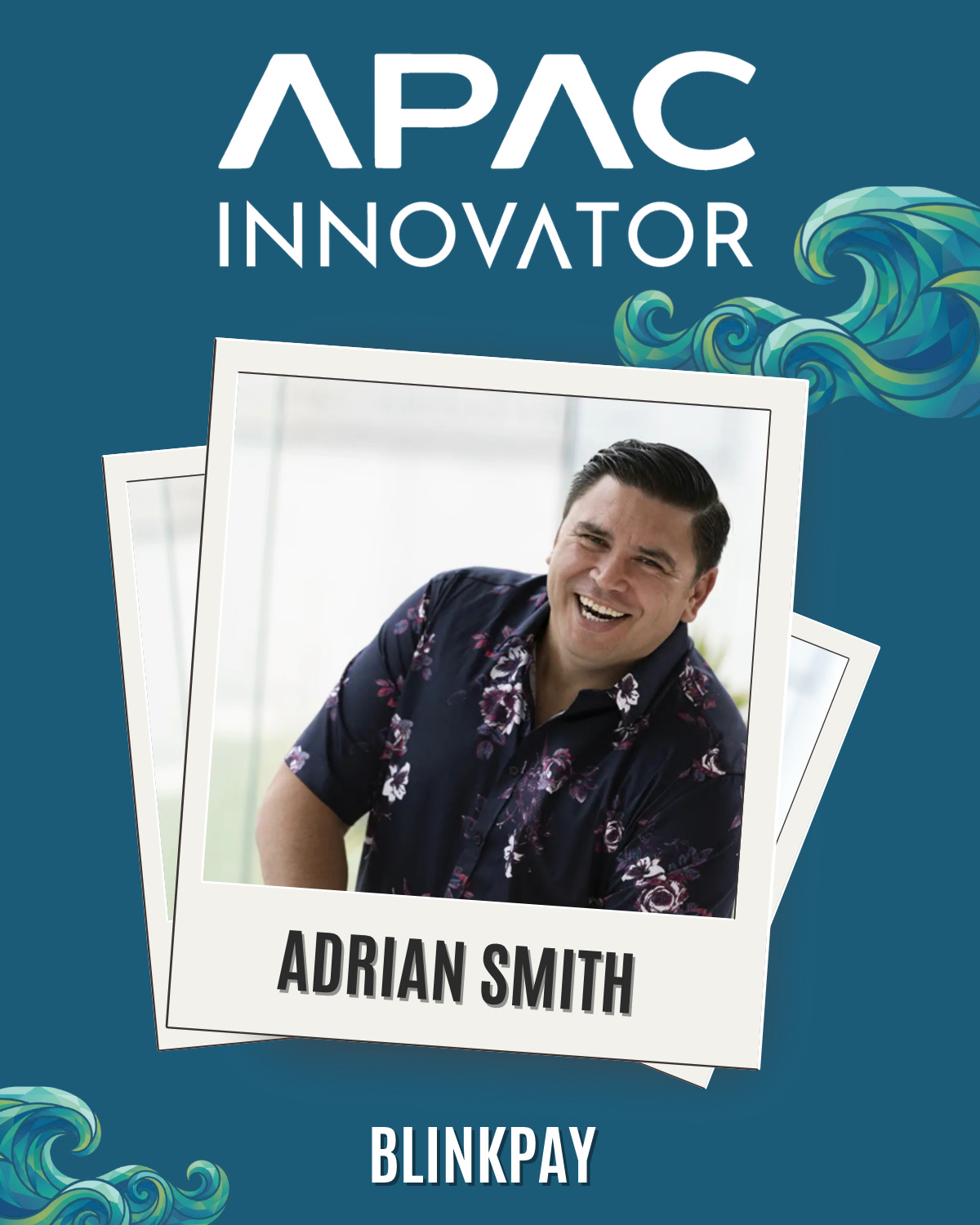
What Does Your Company Do?
“We think of BlinkPay as the integration layer between banks, large New Zealand corporates, enterprises, and mid-market companies looking to facilitate digital payments and data exchange. We are heavily focused on the open banking standard here in New Zealand, building on top of the API endpoints provided by the banks. However, because every provider can access the same underlying infrastructure, our focus is innovating on top of those foundational capabilities so we do not become a commoditised service.
At its core, open banking offers a safer, more cost-effective method for initiating payments and accessing customer data with consent. Compared to traditional credit card schemes, the cost differential for merchants is material. Beyond cost, there is a clear speed-to-cash advantage. Open banking payments settle via banking rails within 30 minutes to two hours rather than days. That gives corporate treasury functions faster surety of funds and the ability to calculate daily interest immediately.
We also solve major operational headaches around recurring payments. Direct debits can drain accounts of financially vulnerable consumers, triggering dishonour fees and financial hardship. For businesses, a failed payment creates massive operational drag through manual reconciliation and collection processes. By combining data APIs with payment rails, we can confirm available funds before an enduring payment is processed, eliminating dishonours and creating smarter, safer financial services.”
What Inspired You To Start It?
“The genesis came from my late cofounder, Daniel (Dan) Karehana, who started with an everyday human problem back in 2015. He was trying to pay his bills on a lunch break and got frustrated. He could not remember his Vodafone app login, could not find his power bill email, and his rates bill was on a fridge magnet. He realised that aggregating bill data directly where people manage their finances would create genuine value for billers, banks, and consumers alike.
Initially, BlinkPay focused on electronic bill presentment. But when COVID-19 hit, banks shifted priorities to immediate customer support, pausing innovation projects. Meanwhile, New Zealand was exploring open banking standards. Dan realised our underlying API architecture was ideal for open banking, so we pivoted to get a second horse in the race.
I met Dan in April 2021 after returning from the UK. He was building a Māori-led financial technology company and needed someone to “talk bank” to help close bilateral agreements with major New Zealand institutions. I ran a live test sending $10,000 from BNZ to ANZ via API rails, watched it clear in 30 minutes, and knew this was real. Tragically, Dan passed away from cancer in December 2022. Our team and board pulled together to honour his dream, securing bilateral agreements across BNZ, Westpac, ASB, and ANZ, and eventually being acquired by Bank of New Zealand while keeping Dan’s vision alive.”
What Is One Win (big or small) You’re Celebrating Now?
“About a year ago, we asserted that instant payments could be delivered across New Zealand using existing banking infrastructure without spending hundreds of millions on brand-new real-time networks. In March, we published test results proving settlement into a receiving account in just 3.6 seconds.
Recently, the Reserve Bank of New Zealand released a paper on modernising the nation’s payments infrastructure, advocating for real-time payment capabilities. While traditional industry thinking suggests building new real-time architecture requires massive capital investment over five to ten years, we have been demonstrating to the RBNZ that New Zealand can achieve instant payments today on current rails for a fraction of that cost.
Without giving away too much, we now have concrete, real-world evidence demonstrating that instant settlement works right now on existing systems. Proving that our local infrastructure is already capable of sub-four-second settlement without waiting years for a multi-million dollar overhaul is a massive win for us and for New Zealand Inc.”
What Is One Lesson You Wish You Learned Earlier?
“Having spent nearly 15 years in British banking overseas, I assumed stepping into a fintech startup would be a comfortable transition. I quickly discovered that operating without a global brand or trillions in balance sheet assets behind you is a vastly different proposition.
When I started, I did not realise how structured and formulaic the venture capital world actually is. I spent three frustrating months arguing with lawyers over the content and structure of our pitch deck while burning precious capital runway. It was only afterwards that I discovered pitch decks follow a standard, proven template expected by investors. If I had known there was a formula, I could have saved us nearly three months of wasted effort.
I wish I had joined a structured accelerator or incubator, like Creative HQ or Y Combinator, right from the start. Surrounding yourself with experienced mentors and a cohort teaches you the rules of fundraising, equity structuring, and storytelling quickly. Trying to reinvent the wheel in isolation costs time and money you simply do not have in a startup.”
How Do You Keep Your Energy Up On Tough Days?
“Every founder stares into the abyss at some point and asks themselves why they are putting themselves through the grind. On those tough days, the only thing that gets you back up off the ground is anchoring firmly back to your core mission and your ‘why’. You need a clear Southern Cross on the horizon to keep moving forward.
For me, that ‘why’ is also deeply personal. When my daughters ask me why I push through the stress and tough moments, my answer is simple: because Dan can’t. Our cofounder passed away before seeing this vision fully realised, so I do it to honour the man and finish what we set out to build.
Whether it is navigating difficult negotiations, iterating product features, or handling setback after setback, keeping your purpose top of mind is what gives you endurance. If you lose touch with why you started in the first place, carrying on becomes almost impossible. But if your purpose is grounded, you can push through almost anything.”
Learn More
Who: Q&A with Adrian Smith, CEO and cofounder of BlinkPay
HQ: New Zealand
Web: blinkpay.co.nz