


What Does Your Company Do?
“PIQNIC is an enterprise productivity platform that solves two massive operational headaches: information management and process management. Most businesses keep these functions separate. Documents, emails, and contracts live scattered across SharePoint, local drives, Slack, or inbox chains. Meanwhile, business processes are managed manually between vertical departments. That disorganisation creates chaos, with the average knowledge worker spending up to two days a week simply hunting for files.
PIQNIC acts as a secure horizontal infrastructure layer across an entire organisation. Instead of searching for information based on where it is buried in a rigid folder structure, our platform allows teams to find documents instantly based on what they are. You can search by customer name, document type, or date range, and pull up verified records in a second across tools like Microsoft 365.
On top of information retrieval, we orchestrate the process side. PIQNIC connects data with people and workflows, adding structure, retention policies, audit trails, and compliance automation without forcing staff to switch between ten different apps. We serve heavily regulated sectors like finance, legal, energy, and infrastructure across North America, Europe, and Australasia, giving companies a unified single source of truth.”
What Inspired You To Start It?
“I have been in this sector since 1997. Originally, I founded an IT consulting and services firm in New Zealand that grew to around 70 people. We helped large corporates digitise paper records and automate document workflows, partnering with global enterprise tech giants like IBM and Oracle across Australia and New Zealand.
By the mid-2000s, it became clear the market had fundamentally moved on. Customers no longer wanted heavy, expensive, siloed software suites that failed to support modern collaborative work. Selling legacy enterprise products felt increasingly out of touch, and I wanted total control over our technology stack rather than reselling someone else’s tools.
So, I put a challenge to my senior technical team: if we were to build our own horizontal platform from the ground up to solve information chaos properly, what would it look like? Their proposals were so compelling that we made a high-stakes pivot. We completely stopped taking on new consulting clients, backed ourselves, and spent four years engineering PIQNIC from scratch. We eventually transitioned our existing enterprise clients off legacy platforms like IBM and Oracle and onto our new software, transforming our services company into a global product business.”
What Is One Win (big or small) You’re Celebrating Now?
“We are celebrating three major milestones right now. First, we recently released an AI-assisted document classification engine. It cuts through the market hype by solving a very practical problem: automatically reading incoming documents, classifying them into compliant locations, and extracting key data like invoice figures straight into ERP workflows.
Second, we achieved official Microsoft 365 certification as a storage and integration partner. Microsoft users frequently struggle with SharePoint sprawl and folder chaos. Our integration allows users inside Microsoft Word or Outlook to file, search, and retrieve records securely with full retention policies in a single second, even across databases containing over 100 million documents.
Finally, we are seeing a clear, repeatable pattern of winning enterprise business in the US. Taking on global tech giants and winning accounts over there (including replacing legacy Oracle systems for a major media company in New Zealand) proves that a privately owned New Zealand platform can compete on the world stage and win business from far bigger established incumbents.”
What Is One Lesson You Wish You Learned Earlier?
“Two big lessons stand out. First, trust your gut and be careful whose advice you take, especially if they have never run a payroll. Early on, people advised us to prove the platform locally in Australasia before attempting the US. When we eventually launched in North America, we found the market far more responsive, generating ten times the leads for the exact same marketing spend. I wish we had made that move two years earlier.
Second, be wary of the VC fundraising treadmill. We spent six months pitching to American venture capital firms, which turned out to be a massive distraction from building the core product. The tech startup world loves to celebrate multi-million dollar raises, but complex deal terms mean many founders end up walking away with very little post-exit.
My advice to early stage founders is to go lean, raise from friends and family if required, and focus on solving one or two core problems exceptionally well for paying customers before ever considering institutional capital.”
How Do You Keep Your Energy Up On Tough Days?
“Building an enterprise technology platform from scratch is genuinely tough, and as a founder, the pressure comes at you from every angle. You have to develop a thick skin and remember that a bad day or a difficult week does not mean you have a bad business. Operational challenges happen in every organisation, so you cannot let short-term friction shake your confidence.
When the workload feels overwhelming, I focus on a simple rule: make things just one little bit better today than they were yesterday. If you hit a wall or get bogged down in everyday fires, step away from your desk, go for a walk, and give the problem some space to breathe.
What keeps my energy up is seeing what a small Kiwi team can achieve on the global stage. Replacing massive global software vendors and hearing everyday users say our platform completely transformed how they work makes every hard yard worthwhile.”
Learn More
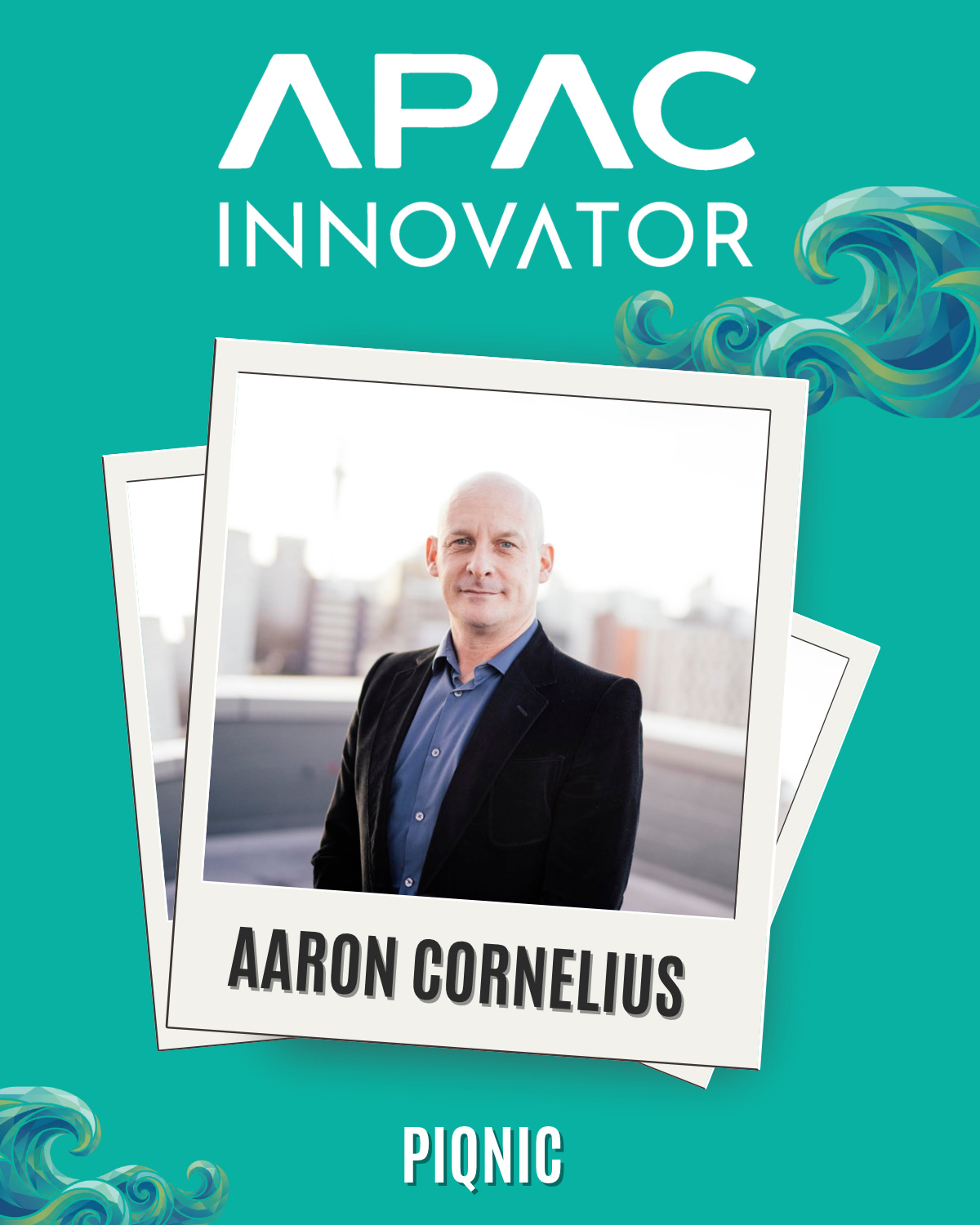
Who: Q&A with Aaron Cornelius, CEO and founder of PIQNIC
HQ: New Zealand
Web: piqnic.com