


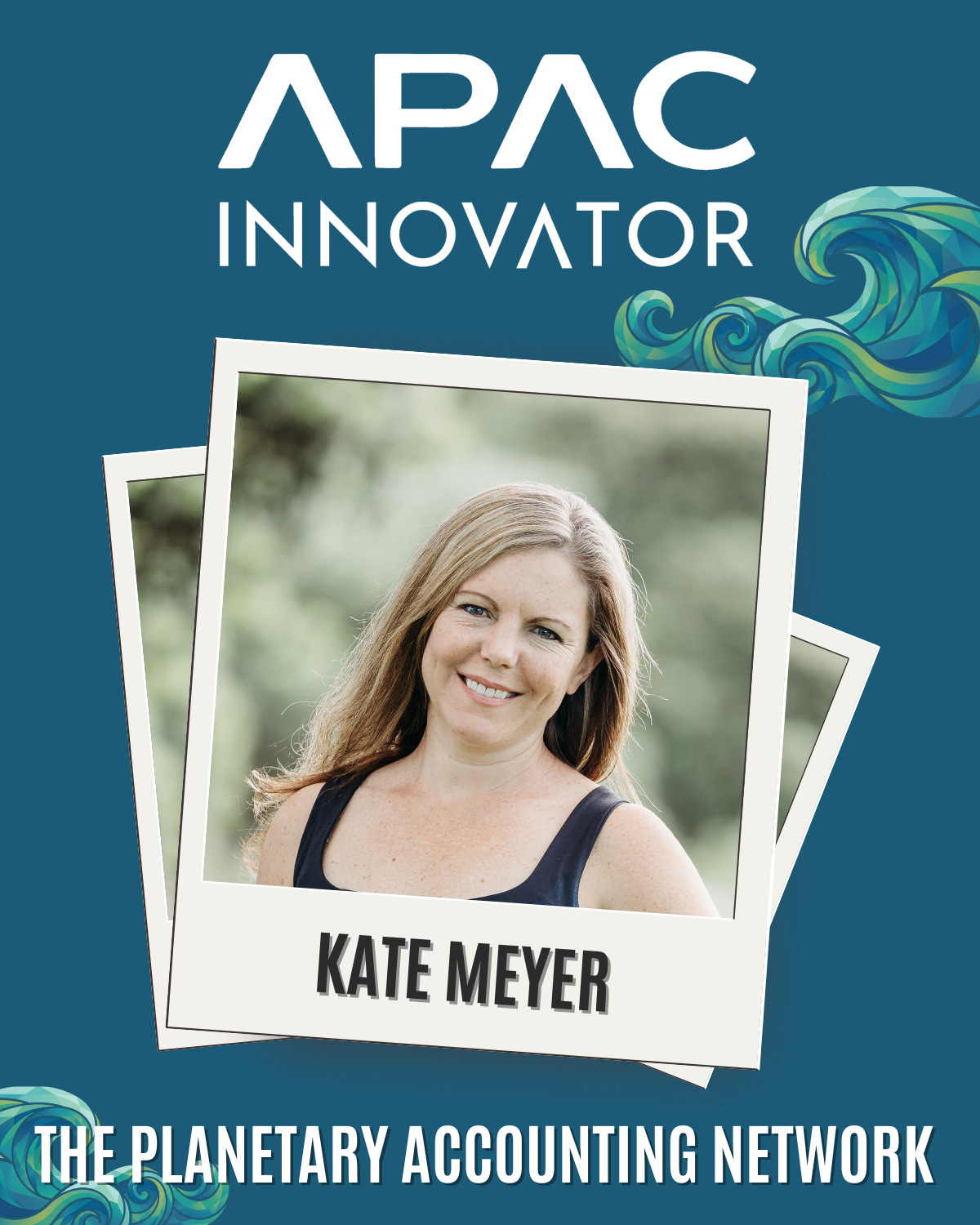
What Does Your Organisation Do?
“We exist to make the environmental costs of everything visible. The Planetary Accounting Network is a registered charitable trust operating as a cross between a standards body and an advocacy group. We set the standards for planetary accounting, helping organisations understand their impacts across ten planetary boundaries, from carbon and water to waste and biodiversity.
Planetary Insights is our standalone, for-profit software platform. You cannot scale technology under a charitable trust, so while we operate as one team, having two entities allows us to scale operations rapidly.
Current sustainability reporting is fragmented. While carbon accounting has reasonable international consensus, broader nature impacts are messy. Businesses are asked for data by international procurers, but eco-labels have become marketing tools rather than comparative standards. We solve two distinct problems. For business-to-consumer brands, we created “Planetary Facts”, which functions like Nutrition Facts on food packaging. It shows a product’s carbon, water, waste, and biodiversity footprints in the context of a recommended daily budget for a healthy planet.
For business-to-business clients, we provide the scientific framework to manage environmental trade-offs. If a company wants to decarbonise a product but the process increases waste, our platform evaluates whether that is a sound trade-off against global planetary limits.
We work across multiple sectors. In food and fibre, we partner with Silver Fern Farms, Bragato Research Institute, Wool Impact, and NZ manuka honey brand BeeNZ, who are launching our Planetary Facts label on retail shelves. In construction, we work with HERA (Heavy Engineering Research Association) on structural steel assessments, integrated with Green Star, and are expanding into Australia and the US with LEED (Leadership in Energy and Environmental Design). We also measure visitor economy footprints with Destination Queenstown and build planetary-linked lending frameworks for financial institutions like the Local Government Funding Agency.”
What Inspired You To Start It?
“This has been a long journey starting back in 2009 when I was living in Singapore working as a sustainable building consultant. I was analysing data comparing the carbon, water, and waste footprints of concrete versus steel for entire buildings. I realised the way we were looking at sustainability data was completely broken. People were spending huge sums of money generating data that did not help anyone make informed decisions because nobody could see what “good” actually looked like.
I tried solving it back then, but it felt too hard so I stopped. Yet it kept irking me. In 2012, I moved to Australia and had my first baby in 2013. During late-night baby feeding sessions, I realised that if I framed the concept as a PhD thesis, I could secure a scholarship and focus on it full-time.
While doing the PhD, I discovered the planetary boundaries framework developed by 28 of the world’s top scientists. At first, I felt silly thinking I could solve something top scientists had already tackled. But I quickly realised that while their science was brilliant, it did not link to practical decision-making. I pivoted my research to build that missing link.
To refine the framework, I packed my two preschoolers into a caravan in 2017 and dragged them around Europe for a year, interviewing nearly 100 international scientists. After publishing the framework as a PhD and a Springer textbook in 2018, I realised nobody changes the world with a textbook. I launched the non-profit in late 2018, became a registered charity in 2019, and established Planetary Insights in 2022. I brought on my brother Mike Merry as co-founder and CTO in 2023 after he said he kept thinking about our software architecture at two in the morning.”
What Is One Win (big or small) You’re Celebrating Now?
“We have several huge milestones coming together right now. On the charitable side, we just secured a major grant to accelerate our impact. That funding enables us to grow the team and speed up our work in making environmental costs visible across Aotearoa and beyond.
On the technology side, new commercial partnerships are opening up fresh verticals, making it easy for users with zero environmental expertise to plug in and extract actionable footprint data.
The win that feels most surreal, however, is seeing our “Planetary Facts” label hit physical supermarket shelves. I have been working towards this since the very beginning. BeeNZ Manuka Honey is launching the label on their product packaging in New Zealand this month, with an international rollout planned over the next six months. Raglan Coconut Yogurt was the first business to put their data into the public domain, and seeing consumers pick up items with our clear environmental budget label on pack is massive. If we can eventually get this standard onto every retail product, it will transform global environmental outcomes.”
What Is One Lesson You Wish You Learned Earlier?
“The biggest lesson across both organisations is the incredible value of getting runs on the board early. When you are starting out, people do not always understand the value of what you are building until they see it in action. Doing upfront free projects, case studies, and getting those initial proof points delivered is critical. The first adopter is always the hardest to secure, but once you get those first runs on the board, everything else unlocks. Having learnt that on the charitable side meant we could move much faster when launching the tech platform.
On the startup side specifically, my biggest learning has been discovering how far you can actually get by bootstrapping. We have bootstrapped Planetary Insights the whole way, and staying lean as a two-person founding team gives us total flexibility to run the business on our own terms and stay fiercely true to our core environmental purpose. We will likely take on investment eventually to scale, but proving how much traction you can achieve on your own steam before taking outside money has been an empowering revelation.”
How Do You Keep Your Energy Up On Tough Days?
“Having an epic team is paramount. No one outside your business truly understands the pressure, so having a co-founder is completely life-changing. Before my brother Mike joined as CTO, it was tough carrying that weight alone because nobody else cared quite as deeply. Now, when we have a hard week, we lean on each other to push through.
Beyond the team, you need non-negotiable circuit breakers that pull your mind entirely out of the business. For me, that means mountain biking, skiing, and getting into the gym.
I treat physical wellbeing as a legitimate part of my job description rather than an afterthought. I book gym sessions directly into my work calendar every single day just like client meetings. During winter, I block out dedicated midweek ski days on the mountain. If you do not schedule exercise as a non-negotiable work commitment, your to-do list will always be 200 items long and fitness will get pushed aside every time. You just have to accept that work can wait until after the gym.”
Learn More
Who: Q&A with Kate Meyer, CEO and cofounder of The Planetary Accounting Network
HQ: New Zealand