


What Does Your Company Do?
“We build modular, plug-and-play robotic kitchens that take inspiration from a data centre rack. Instead of distributing kitchens horizontally, we stack them vertically and let robots control the cooking. Our systems are designed to fit into existing restaurants and food service businesses to alleviate severe labour shortages, with a modular architecture that can eventually scale from a home to a stadium on the exact same footprint.
We are not trying to eliminate humans from hospitality. Preparation is still handled by people, preserving that human essence in the food, while robots take over the high-skill, repeatable finishing tasks. That means a chef can prepare ingredients during the day, and our system can serve finished meals at 2am while the chef is asleep.
We are closer to an industrial-scale food processing line on a compact footprint than a humanoid robot trying to mimic a chef. By stacking vertically, we bypass human physical limits. A robot does not care if boiling liquid or hot oil is two and a half metres in the air.
There are 29,000 unfilled chef positions in Australia, 140,000 in the UK, and nearly 300,000 in Japan. Operating margins in food service are under 5%, so venues are paying more for less qualified staff while food quality drops. We offer an automated alternative to solve that acute labour crisis.”
What Inspired You To Start It?
“The idea came together about a year ago at my father’s wake. I bumped into a family friend of twenty years, Richard Ousby, who is an award-winning chef with two Chef’s Hats to his name. We started talking about robotics and had this wild idea… what if you could stack a kitchen all the way to the ceiling against one wall, keeping the rest of the venue as open theatre space?
I was excited by the artistic vision of a robotic ballet producing food, but Richard was focused on the operational reality. He manages dozens of chefs across multiple venues, and recruiting, training, and retaining kitchen staff is an ongoing battle. Shortly after, my cofounder Amanda and I joined forces with Richard. We took over a space in an innovation hub with a robotic kitchen setup and spent three months experimenting.
When we looked deeper at the systemic trends, wage pressures, closing culinary schools, and exploding delivery app demand, automation felt inevitable. I reached out to founders of former robotic kitchen startups that had failed, and they all said the same thing: the vision is inevitable, but they were simply too early. Today, with restaurant margins razor-thin, the market need has finally caught up.”
What Is One Win (big or small) You’re Celebrating Now?
“Our biggest early validation came in May when we pre-sold three units at a trade show. Those initial buyers represent three totally different profiles - a regional pub in Victoria, a high-throughput airport venue, and a suburban community restaurant. Every one of them cited staff consistency as their single biggest headache.
On the capital and advisory side, we are currently running a pre-seed SAFE round. Andrew Barnes, cofounder of Go1, has come on board as an early angel investor and advisory board member. We also have the head of hospitality innovation from Project NEOM in Saudi Arabia advising us.
Alongside our core kitchen racks, we took on a standalone project to build a high-speed robotic barista. It is designed for a drive-through application, capable of producing 120 cups per hour or 700 a day at true Australian coffee quality standards. That unit is scheduled for deployment in December.”
What Is One Lesson You Wish You Learned Earlier?
“Honestly, every mistake we make right now is a valuable learning outcome. We optimise for the maximum number of iterations in the shortest period of time so we can fail fast, fix things, and keep moving forward.
That said, our biggest misstep early on was spending four or five months in a shared space using someone else’s robotics setup and software. We thought it would deliver mutual value, but it turned out to be a distraction. We fixed their system and got it cooking end-to-end, but they could not commercialise it.
If we had our time again, we would have cut out that middle step and gone straight to building our own proprietary rack-based prototype. Demand is not our bottleneck; physical build capacity and resource bandwidth are. In hardware, credibility follows tangible execution. Once you prove the system cooks, the resources follow.”
How Do You Keep Your Energy Up On Tough Days?
“Every founder eventually realises that there is something slightly broken in their head, otherwise no one would choose to do this. I view hard days as essential for perspective. Darkness is only dark when contrasted with light. The devastating moments only feel heavy when set against the wins, and flipping your mindset to treat adversity as contrast makes every victory far sweeter.
That shift in perspective really hit home for me over the last two years around the time my father passed away. I realised that I chose this path, so I cannot treat setbacks as pure negativity. They form the dark background on the canvas, allowing the vision you are trying to paint to actually stand out.
We operate by a quote on our team: never underestimate how a small group of dedicated, crazy individuals can change the world, because they are the only ones who actually might. You have to be a bit nuts to try and transform an entire industry.”
Learn More
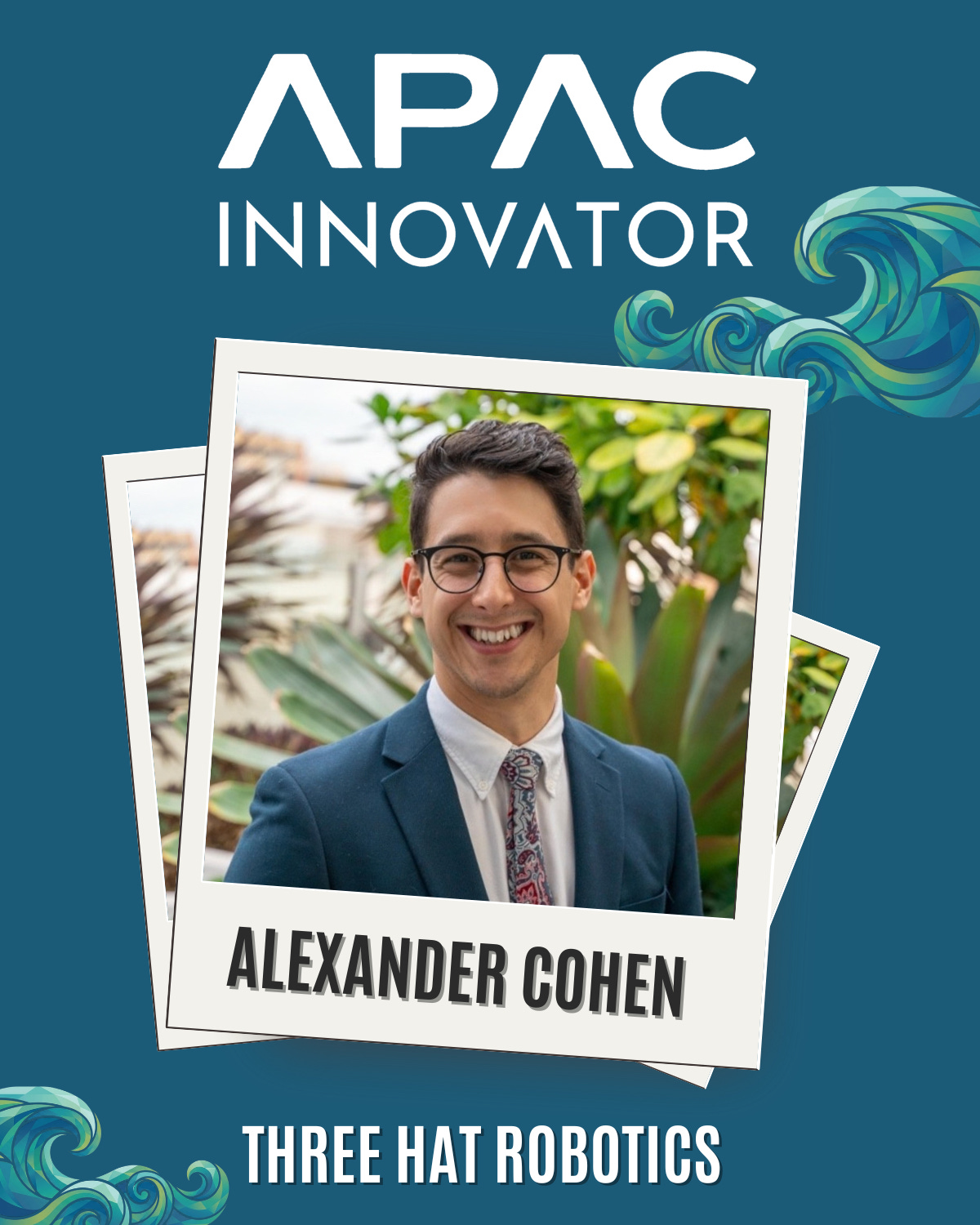
Who: Q&A with Alexander Cohen, cofounder at Three Hat Robotics
HQ: Australia
Web: threehatrobotics.com