


What Does Your Company Do?
“At a high level, Wellbeing Solutions is about being the ambulance at the top of the cliff rather than at the bottom. We provide a platform designed to identify and support workplace mental health challenges early. Our model rests on three core pillars: proactive psychosocial risk assessments, a customisable SMS triage system that directs employees to professional support, and AI4U, an interactive navigational tool that guides individuals to the right care.
We deliberately built our system around simple SMS text messaging rather than a mobile app. When you look at mental health data, roughly 40 percent of personal challenges tie directly to financial hardship. When money is tight, mobile data and app subscriptions are the first things to go. On top of that, workplace app retention plummets below seven percent after two months. Text messaging is universal, accessible across all demographics, and incredibly resilient during emergency infrastructure outages.
We started strategically in Australia to align with their strict psychosocial risk legislation, where WorkSafe actively enforces workplace compliance. We focus on organisations with 50 or more employees across high-risk industries, financial services, education, and government. Now, we are bringing those proven learnings back home to New Zealand to build safer, more responsive workplaces.”
What Inspired You To Start It?
“The catalyst came a few years ago while working with a government client in New Zealand. I was confronted with the stark reality of our national mental health and suicide statistics. Coming from Belfast in Northern Ireland and living through the Troubles before moving to New Zealand 20 years ago, I have always appreciated the safety and sense of community we enjoy down here. Realising the depth of the mental health crisis felt like a wake-up call, and I felt a genuine sense of responsibility to do something about it.
My career has been built on risk management and navigating complex physical crises, including major events like the Christchurch earthquake and the mosque shooting. I realised we were managing physical safety with immense rigour, but treating mental health as an afterthought.
I spent three years studying workplace wellbeing models across the UK, Canada, Australia, and Asia to unpack why traditional interventions were missing the mark. Combining that domain knowledge with an operational risk mindset, I set out to build a practical tool that removes barriers to care and intervenes before a crisis escalates.”
What Is One Win (big or small) You’re Celebrating Now?
“Beyond our commercial expansion back into New Zealand, the win that means the most to me is a life-saving intervention we saw just before Christmas. A client based in Palmerston North was conducting an induction test to demonstrate how our customisable SMS triage system works, sending a sample check-in message to selected staff and subcontractors.
One subcontractor received the test message and simply replied that he was not okay. Because our system is strictly confidential, he felt safe enough to be honest. Our employee assistance programme team flagged the response immediately, and the business owner personally drove the worker home that evening. When they arrived, they discovered his wife and kids were away up north, and a suicide note was sitting on the dining table.
If that simple text message had not landed on his phone that afternoon, that man may well not be here today. Thinking about his family over the Christmas break gave me immense pride. It was absolute proof that our confidential, low-barrier workflow does exactly what we built it to do which is catch people before they fall.”
What Is One Lesson You Wish You Learned Earlier?
“I wish I had realised earlier how isolating the founder journey can be when you are completely head-down trying to solve a complex problem. You get so focused on your pipeline and immediate deliverables that you forget to step back.
If I could go back, I would tell myself to allocate at least four hours every month to get out of the office and connect with other founders, business networks, and industry groups. I have started doing that regularly across Auckland, attending local business events and mental health seminars, and the impact has been immediate.
What surprised me is that these coffee catch-ups are not just about enriching my own business. Because this is not my first rodeo, spending 15 minutes sharing practical guidance with younger founders can completely unblock a problem they have been wrestling with for weeks. Building that community feedback loop keeps you grounded and reminds you why you started.”
How Do You Keep Your Energy Up On Tough Days?
“In business, most tough days revolve around people, so my primary strategy is keeping my inner circle small and grounded. As a founder, you quickly learn who your real allies are because they stick around during the tough stretches and check in on you without prompting. Surround yourself with people who share your integrity.
I do not wake up in the morning dreading problems, but I do wake up in the middle of the night when an idea hits. I keep a little red notebook upstairs on my bedside table to write down concepts and potential solutions. They might not be relevant today, but capturing them gives me clarity.
When operational pressures or financial frictions arise, keeping your energy up comes down to structured planning and ruthless prioritisation. You have to accept your limitations and actively seek advice when you need it. When you manage your priorities with discipline and have trusted people around you, you can navigate the hard days and still get a solid night’s sleep.”
Learn More
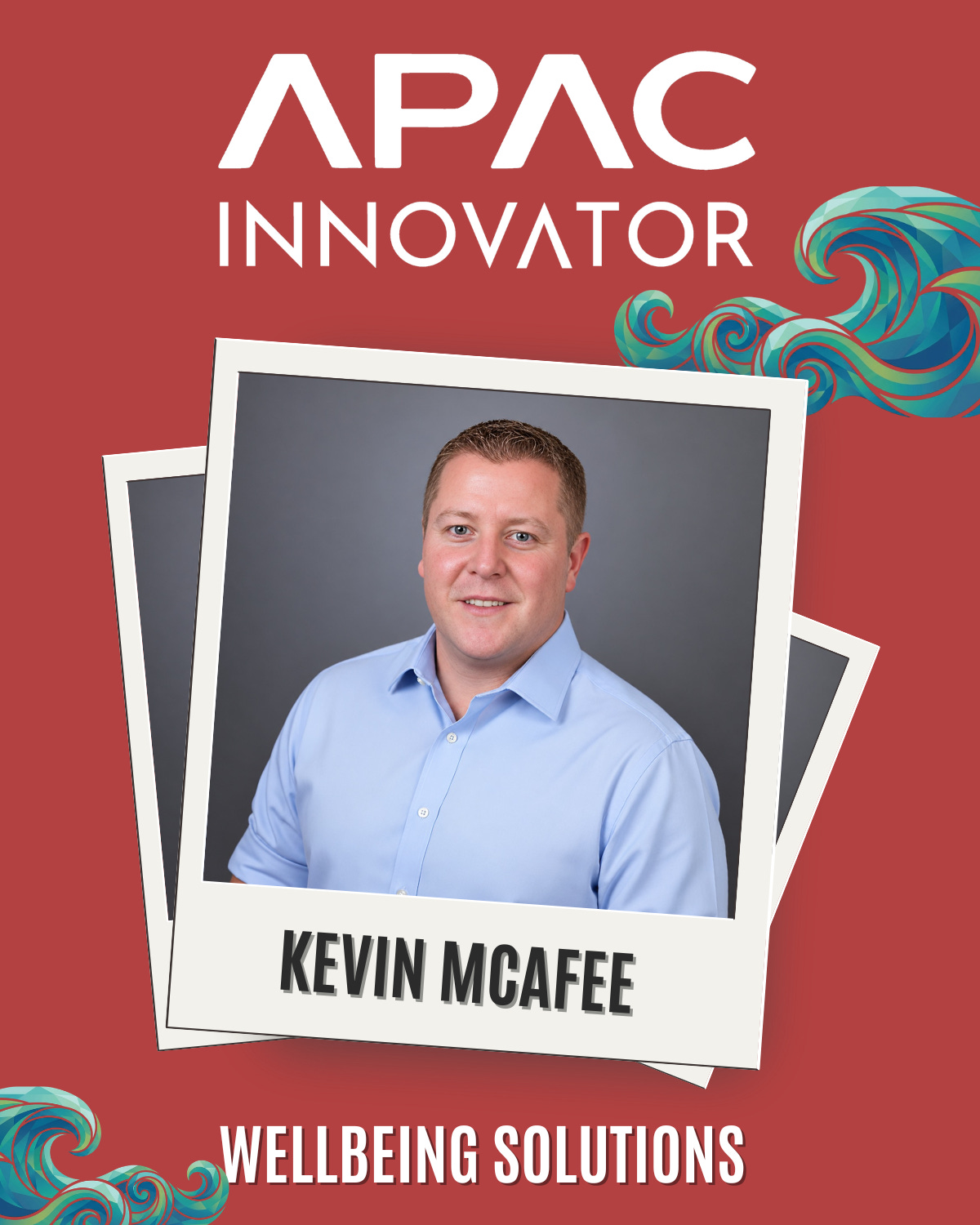
Who: Q&A with Kevin McAfee, CEO and founder of Wellbeing Solutions
HQ: New Zealand